
To scrap a car in the UK you need valid photo ID, your V5C logbook if you have it, and you receive a Certificate of Destruction on the day of collection. The Certificate of Destruction is issued by the scrap dealer at the point of collection. Your photo ID is the only document you must have in hand when the driver arrives.
The Three Documents Involved in Scrapping a Car
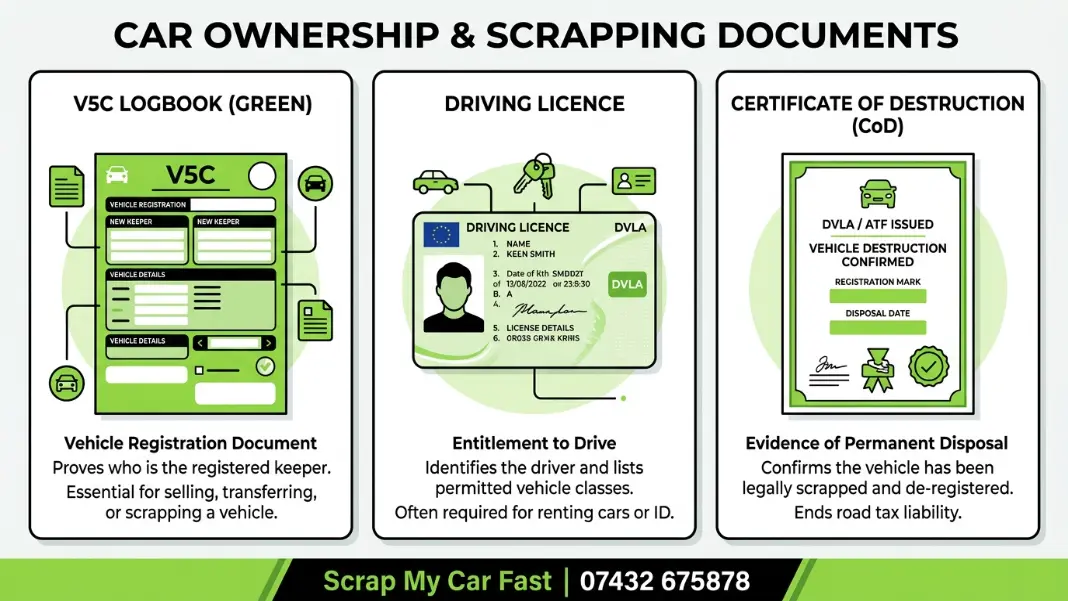
When people ask what documents they need to scrap a car, they are usually thinking about three things: the V5C logbook, their own identity documents, and the Certificate of Destruction. Each plays a different role, and understanding that role makes the whole process much less confusing.
You provide your photo ID and the V5C if you have it. The scrap dealer issues the Certificate of Destruction and notifies the DVLA. By the end of the collection day, the vehicle is removed from your name and your legal liability ends.
Your V5C Logbook
What the V5C Is
The V5C is the vehicle registration certificate issued by the DVLA. It is the green document that lists the registered keeper, the vehicle make, model, engine size, colour and registration number. Many people call it the logbook, though this is an informal term that has stuck.
The V5C does not prove ownership in a legal sense. It proves who is the registered keeper, which is not the same thing. This distinction matters if you bought a car without one or if you are scrapping a vehicle registered to someone else’s name.
What Happens If You Have It
If you have the V5C, bring it on the day of collection. The driver will use it to confirm the vehicle details match what was described when you booked. You sign the relevant section of the V5C, and the dealer retains it as part of the legal record and to facilitate the DVLA notification.
In our experience, having the V5C makes the collection faster and more straightforward. Everything can be confirmed on the spot and the DVLA notification goes through without any extra steps.
What Happens If You Do Not Have It
Not having the V5C does not stop us collecting your car. Licensed scrap dealers are permitted to buy vehicles without a V5C as long as the seller can prove identity and ownership through other means. We handle this situation every week.
Without a V5C, you will need alternative evidence of ownership. This can include an insurance certificate in your name for that vehicle, an MOT certificate, a purchase receipt, or a bank transfer record showing you paid for the car. You will also need photo ID regardless.
The DVLA can still be notified without the physical V5C. We submit the notification electronically using the vehicle registration number. The DVLA does not require the paper document to mark a vehicle as scrapped in their system.
Photo ID: The One Document You Must Have
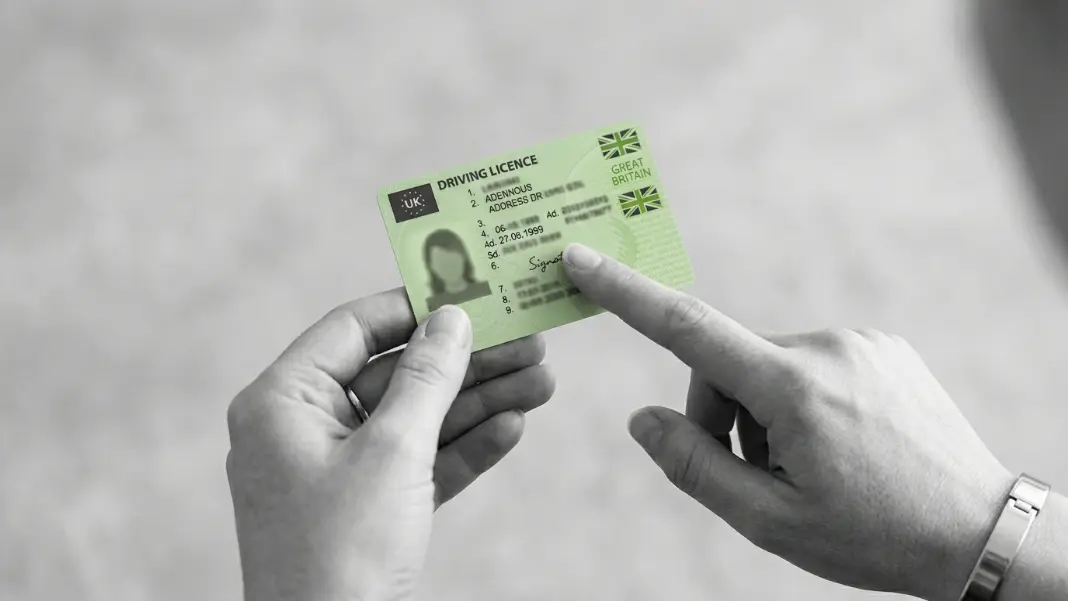
Under the Scrap Metal Dealers Act 2013, all scrap car transactions require valid photo ID from the seller. This is a legal requirement that applies across the UK, regardless of whether you have a logbook or not.
Accepted forms of photo ID are:
- A valid UK or international driving licence, full or provisional
- A valid passport
- A national identity card issued by a recognised state
The ID must be current and not expired. An expired driving licence or passport will not be accepted. If you are not sure whether your ID is still valid, check the expiry date before your collection day.
The Scrap Metal Dealers Act 2013 also requires that this ID check be recorded by the dealer. Our drivers log the type of ID, the name it is in and the date. This record is kept as part of our compliance obligations. You can read the full text of the Scrap Metal Dealers Act 2013 on legislation.gov.uk.
The Certificate of Destruction
What It Is
The Certificate of Destruction (CoD) is the document that legally ends your ownership of a scrapped vehicle. It confirms that the vehicle has been accepted by an Authorised Treatment Facility and will be processed for recycling under the End of Life Vehicles Regulations 2003.
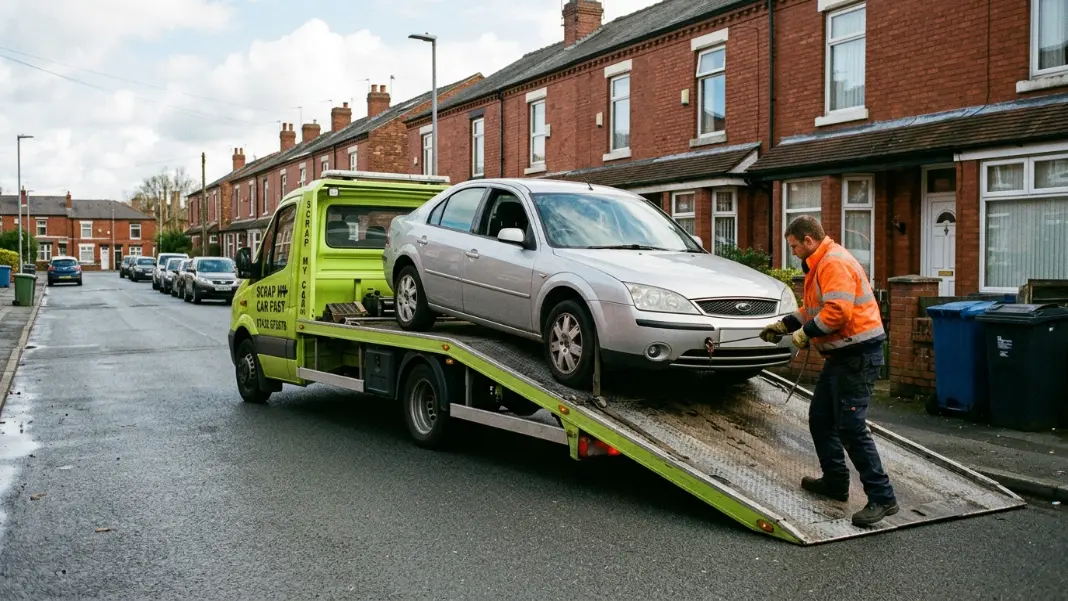
The CoD is not something you bring. It is something you receive. Our driver issues it on the day of collection before the vehicle leaves your property. You do not need to apply for it or ask for it separately. It is a standard part of every collection we do.
Why It Matters
Once a CoD has been issued and the DVLA has been notified, the vehicle is removed from your name in the DVLA’s registered keeper database. From that point, you are not liable for any traffic offences, parking fines, Dart Charge penalties, toll charges or anything else linked to that registration number.
Keep your copy of the CoD in a safe place. If any charge or fine arrives in the post linked to that registration after the date shown on your CoD, you can use the document to challenge it and have it dismissed.
What Information Appears on a CoD
A Certificate of Destruction issued by an ATF includes:
- Your name as the person surrendering the vehicle
- The vehicle registration number
- The vehicle identification number (VIN or chassis number)
- The date of collection
- The name and licence number of the Authorised Treatment Facility
- A unique CoD reference number
- Signature of the authorised ATF representative
Check these details on the day. If any of them are wrong, ask the driver to correct them before you sign.
DVLA Notification: What Happens to the Vehicle Record
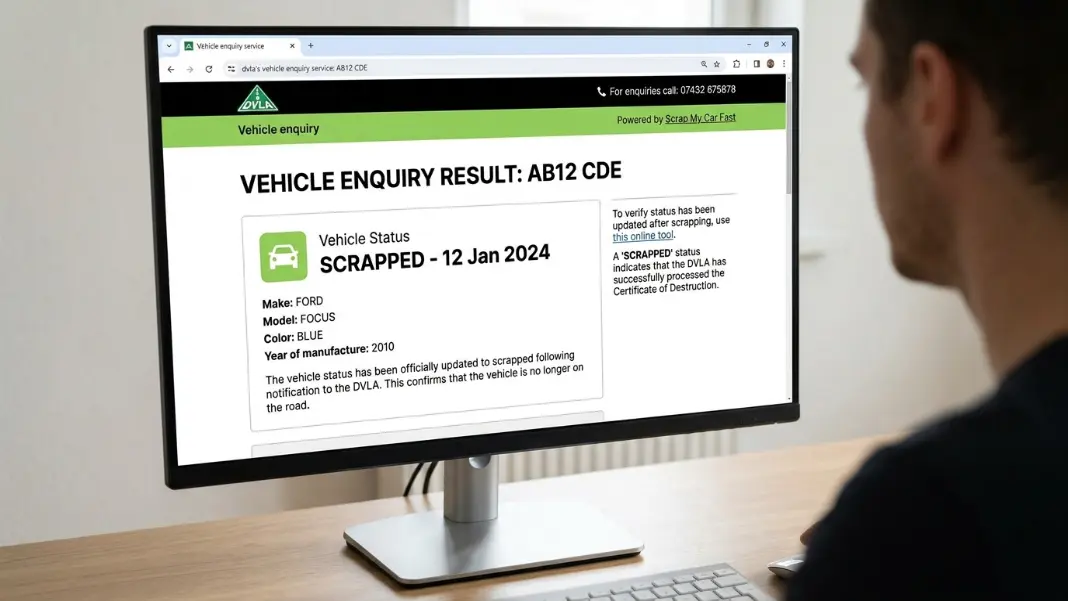
When your car is collected by a licensed ATF, the DVLA must be notified that the vehicle has been permanently removed from use. This notification is what triggers the removal of the car from your registered keeper record.
We submit the DVLA notification on your behalf as part of every collection. You do not need to do this yourself. The notification is submitted electronically through the DVLA’s system for Authorised Treatment Facilities.
Once the DVLA processes the notification, two things happen automatically:
- The vehicle is removed from your registered keeper record
- Any remaining Vehicle Excise Duty (road tax) is cancelled and a refund is issued to the registered keeper’s address on record
The VED refund is calculated in whole months. If your tax runs to the end of August and we collect in mid-June, you receive a refund for July and August. The refund comes by cheque from the DVLA, typically within six to eight weeks. DVLA guidance on scrapped vehicles is available at gov.uk.
What to Do If You Have Lost Your V5C
Losing the V5C is the most common document problem we deal with. It happens often because the logbook was kept in the glovebox and has been lost, damaged or thrown away over the years.
Option 1: Apply for a Replacement
You can apply for a replacement V5C using the DVLA’s V62 form. The form is available at post offices or can be downloaded from gov.uk. The fee is currently £25 and the replacement typically takes three to five weeks to arrive by post.
If you need to scrap the car quickly, waiting three to five weeks may not be practical. In that case, you can proceed without the V5C using the second option below.
Option 2: Proceed Without the V5C
Call us before booking to explain that you do not have the V5C. We will ask you a few questions about the vehicle and your ownership situation and advise on what supporting documents you should gather. In most cases, a valid driving licence and one supporting ownership document is sufficient to proceed.
Supporting documents that help establish ownership without a V5C include:
- A motor insurance certificate in your name for that vehicle
- An MOT certificate for the vehicle
- A purchase receipt or sales agreement
- A bank transfer record showing payment for the car
- A hire purchase or finance settlement letter
Special Cases: Documents You May Need
Inherited Vehicles
If the registered keeper has passed away and you are acting on behalf of the estate, the standard V5C may still be in the deceased’s name. This does not prevent us from collecting the vehicle, but you will need additional paperwork.
In our experience, the most useful documents for inherited vehicle collections are:
- Your own photo ID, driving licence or passport
- A grant of probate or letters of administration confirming your authority to deal with the estate
- The V5C in the deceased’s name, if available
- A death certificate, which helps confirm the registered keeper’s status
We deal with inherited vehicle collections regularly. Call us before booking and we will tell you exactly what you need given your specific circumstances. We aim to make this as straightforward as possible, particularly at a difficult time.
Cars Bought Without a Logbook
Buying a car without a V5C happens, particularly with older vehicles sold privately. If you bought without a logbook and are now trying to scrap it, you will need your best available evidence of ownership: purchase receipts, bank statements, text message trails, or a letter from the previous seller confirming the sale.
Call us before booking to discuss your situation. We will advise on whether we can proceed and what documentation we need.
Vehicles Where the Logbook Was Stolen
If your car was stolen and returned without the V5C, apply to the DVLA for a replacement using form V62. In the meantime, your crime reference number from the police serves as supporting evidence when combined with your driving licence. The crime reference number confirms a report was made and supports your account of why the logbook is missing.
Finance Vehicles
If your car is subject to a finance agreement, the legal ownership may technically rest with the finance company rather than with you as the registered keeper. You must settle the outstanding finance before scrapping the car. Scrapping a vehicle under live finance without the finance company’s consent is not permitted and could have legal and financial consequences.
Contact your finance provider and obtain a settlement figure. Once the finance is cleared, request written confirmation that the agreement is closed. Bring this confirmation on collection day.
Scrap Car Document Checklist
Here is a summary of what to prepare before your collection day:
| Document | Required? | What It’s Used For |
|---|---|---|
| Photo ID (driving licence or passport) | Yes, always | Legal requirement under the Scrap Metal Dealers Act 2013 |
| V5C logbook | Preferred, not essential | Confirms vehicle details and registered keeper status |
| Insurance certificate (current) | Helpful if no V5C | Supports ownership without the logbook |
| MOT certificate | Helpful if no V5C | Supports ownership without the logbook |
| Purchase receipt or bank record | Helpful if no V5C | Shows you paid for the vehicle |
| Grant of probate or letters of administration | Inherited vehicles only | Confirms authority to deal with the estate |
| Finance settlement letter | If previously on finance | Confirms the car is owned outright |
| Certificate of Destruction | Issued on the day by us | Legal record that vehicle has been scrapped |
What Not to Do When Scrapping a Car
A few things to avoid to protect yourself legally and financially:
- Do not sell to an unlicensed dealer. Only Authorised Treatment Facilities can legally issue a Certificate of Destruction. If you sell to someone who cannot issue a CoD, you remain legally connected to the vehicle and could face liability for what happens to it.
- Do not accept cash. The Scrap Metal Dealers Act 2013 bans cash payments for scrap metal and scrap vehicles. Any dealer offering to pay you in cash for your car is operating illegally. Bank transfer is the only permitted payment method.
- Do not scrap a car under live finance. Clear any outstanding finance before scrapping. Selling a financed vehicle without the finance company’s consent can have serious consequences.
- Do not pre-sign documents and post them to a dealer. Documents should be completed in person on collection day with the driver present. Never sign sections of the V5C in advance and send them.
After Collection: What Happens to Your Vehicle Record
Once the collection is complete and the DVLA notification has been submitted, the following happens in the days and weeks after:
- The DVLA processes the CoD notification and removes the vehicle from your registered keeper record
- Any remaining road tax (VED) is automatically cancelled
- A VED refund cheque is posted to the address on the DVLA’s record for the remaining complete months
- You can cancel your motor insurance, as the vehicle no longer exists
- The ATF begins the depollution and recycling process
If you have a personalised number plate you wish to retain, you must transfer it to a retention certificate or another vehicle before the car is scrapped. Once a Certificate of Destruction is issued, the registration number is retired and cannot be recovered. Contact the DVLA about personalised plate retention before booking your scrap collection.
Frequently Asked Questions
Do I need the V5C to scrap my car?
No. The V5C is preferred but not legally required to scrap a car. You need valid photo ID and ideally supporting ownership documents such as an insurance certificate or purchase receipt. We handle the DVLA notification on your behalf without needing the physical V5C document in most cases.
What ID do I need to scrap a car?
You need a valid photo ID: a UK or international driving licence, full or provisional, or a valid passport. The ID must not be expired. This is a legal requirement under the Scrap Metal Dealers Act 2013 and applies to every scrap car transaction in the UK.
What is the Certificate of Destruction and do I need to apply for it?
The Certificate of Destruction is issued by the Authorised Treatment Facility on the day of collection. You do not apply for it. It is a standard part of every legal scrap car collection and serves as your proof that the vehicle has been legally disposed of. Keep your copy for at least a year after collection.
My V5C is in my ex-partner’s name. Can I still scrap the car?
The V5C records the registered keeper, not necessarily the legal owner. If you are the legal owner of the vehicle, you can still scrap it. Call us before booking to discuss your specific situation and what documentation you will need to proceed legally.
How do I get a replacement V5C if I’ve lost mine?
Apply to the DVLA using form V62, available from post offices or on gov.uk. The current fee is £25. Replacements typically take three to five weeks to arrive. If you need to scrap the car urgently, you can proceed without the V5C using photo ID and supporting ownership documents instead.
What happens to my road tax after scrapping?
Your road tax is automatically cancelled by the DVLA once the CoD notification is processed. Any remaining complete months of VED are refunded by cheque to the address on the DVLA’s registered keeper record. You do not need to contact the DVLA separately to cancel the road tax or request the refund.