
A Certificate of Destruction, usually shortened to CoD, is the official document that proves your car has been permanently destroyed and recycled by a licensed operator, and it’s the only thing that legally ends your responsibility for the vehicle. Without it, the DVLA’s records still show you as the registered keeper, which means road tax demands, parking penalties, and any offence linked to the car can still land on your doorstep, regardless of what the person who took the car away told you.
That’s the short version. The rest of this guide covers where the CoD actually comes from, what it has to contain to be valid, what happens if a vehicle never gets one, and the specific situations where people get caught out.
Where a Certificate of Destruction Comes From
A CoD can only be issued by a licensed Authorised Treatment Facility, the type of site that holds an environmental permit specifically for depolluting and destroying end-of-life vehicles. This isn’t a document a general scrap yard, a car breaker, or an unlicensed collection driver can produce, no matter how official it looks. The legal basis for the whole system sits in the End of Life Vehicles Regulations 2003, which brought a European directive into UK law and created the CoD as the formal proof that a vehicle has genuinely reached the end of its life.
Once your vehicle has been depolluted, stripped of reusable parts, and crushed or shredded, the ATF submits the CoD electronically to DVLA. DVLA then removes the vehicle from the register under your name, cancels any outstanding Vehicle Excise Duty, and processes a refund for any remaining full months of road tax you’d already paid.
Destruction Is Not the Same as Dismantling for Parts
This distinction trips a lot of people up, and it’s one most guides skip entirely. A CoD is only issued when a vehicle has genuinely been depolluted and recycled as scrap, its metal shell crushed and sent to a mill. If a yard instead strips your car for resaleable parts and sells the shell on, or keeps the vehicle roadworthy to sell as salvage, that is not destruction, and no CoD applies.
This matters because some operators advertise “we’ll scrap your car” when what they actually mean is they’ll break it for parts and sell the remaining shell elsewhere, sometimes to a genuine ATF further down the chain, sometimes not. If your priority is a clean legal break from the vehicle, ask directly whether your car will be destroyed on site or passed on, and confirm you’ll still receive a CoD either way.
What a Valid Certificate of Destruction Actually Contains
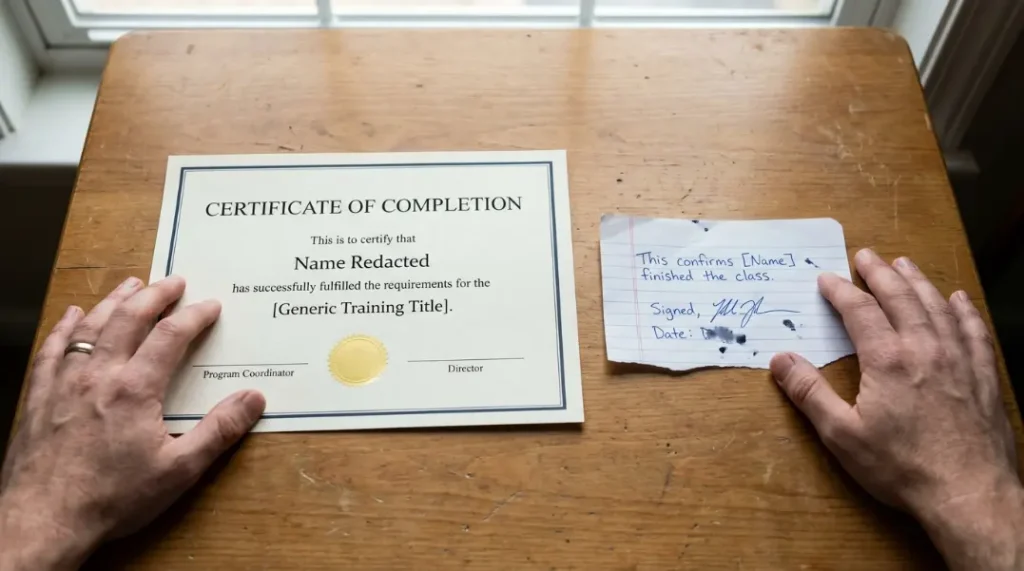
A genuine CoD is a formal document, not a handwritten receipt or a printout the operator produces themselves. It should include:
| What’s on it | Why it’s there |
|---|---|
| Vehicle registration number and VIN | Ties the certificate to the exact vehicle destroyed |
| Make and model | Cross-checked against your DVLA record |
| ATF permit number | Proves the issuing site is genuinely licensed |
| Date of issue | The date DVLA’s record officially changes |
| Registered keeper details | Closes the chain of legal ownership to you specifically |
If an operator hands you something that doesn’t include these details, a scrap of paper with a signature, or nothing at all beyond a verbal promise, that’s a strong sign you’re not dealing with a genuine ATF. A legitimate CoD is a secure, officially generated document. You can’t print one yourself, and neither can an unlicensed operator, which is exactly why it carries the legal weight it does.
A few signs worth watching for before you ever hand over your keys:
- The operator can’t tell you their ATF permit number on request. A genuine ATF gives this without hesitation, since it’s public information anyway.
- They promise a CoD “in the post” with no timeframe. Most licensed operators can tell you exactly when to expect it, typically within 7 days.
- The paperwork they show you at collection doesn’t mention DVLA at all. A real CoD process always ends with the vehicle being removed from DVLA’s register, that’s the entire point of it.
- They offer cash on the day. This is unrelated to the CoD itself but tends to correlate with the same operators cutting corners elsewhere, since cash payment for scrap metal has been illegal since 2013.
How Long It Takes to Receive One
Most licensed operators issue a CoD within 7 days of the vehicle being processed, and many hand you a physical copy on collection day itself once the destruction has gone through. If you’re still waiting after a couple of weeks, it’s worth chasing the operator directly with your registration number before assuming anything’s gone wrong.
What Happens If You Never Get One
This is where the real risk sits. Without a CoD, DVLA’s system has no reason to update its records, and as far as the government is concerned, the car is still yours. That means:
- You remain liable for road tax on a vehicle that no longer exists
- Any parking penalty, speeding offence, or ULEZ-style charge linked to the vehicle can still be pursued against you
- The automatic road tax refund for unused months never triggers, because it’s specifically tied to DVLA processing the CoD
- If the vehicle turns up abandoned, or involved in a crime, you may be the first person contacted as the registered keeper
None of this requires anyone to have acted maliciously. It can simply be the result of using an operator who wasn’t a genuine ATF, or who was one but failed to file the paperwork correctly. Either way, the liability sits with you until it’s resolved, not with them.
The financial risk is more specific than it might sound. Separately from the CoD issue, failing to keep DVLA informed about a vehicle’s status starts with an out-of-court settlement letter of £55, reduced to £35 if paid within 17 days, and can escalate to a maximum £1,000 fine through the magistrates’ court if ignored. A missing CoD compounds this, because without it, DVLA has no reason to believe anything has changed about the vehicle at all.
Certificate of Destruction vs Notice of Destruction
These two terms get confused often enough to be worth separating out. A Certificate of Destruction applies to standard end-of-life vehicles processed under the End of Life Vehicles Regulations 2003, cars and light vans in the categories most drivers deal with. A Notice of Destruction, or NoD, applies to vehicles that fall outside that scope, certain heavier commercial vehicles being the main example, and it doesn’t close the DVLA record in quite the same permanent way a CoD does. If you’re dealing with anything other than a standard car or van, it’s worth confirming directly with the ATF which document actually applies to your vehicle rather than assuming.
How to Check Whether a CoD Has Actually Been Issued
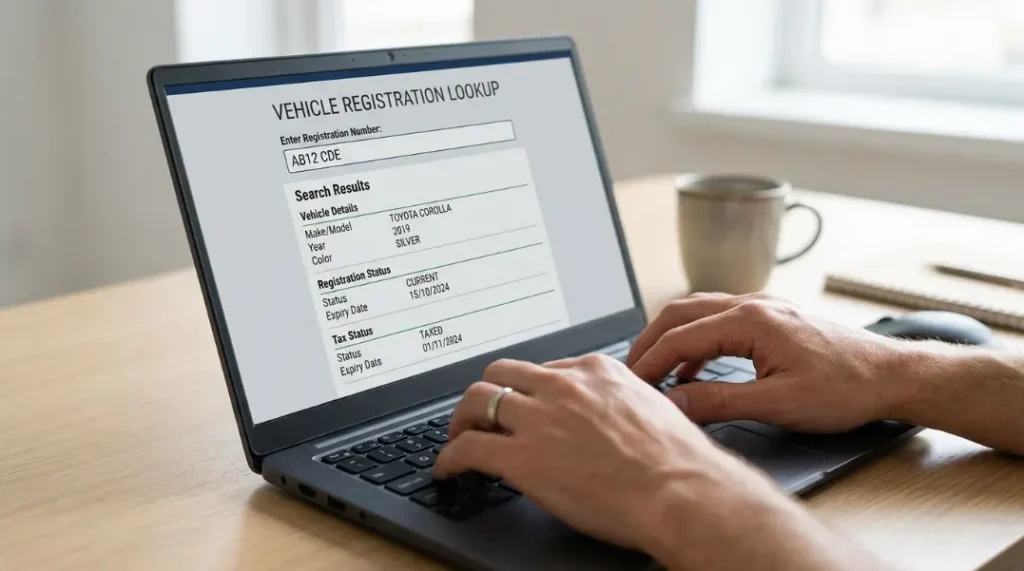
You don’t have to take an operator’s word for it. DVLA’s own vehicle enquiry service lets you check the current registered status of any UK vehicle using its registration number. If a CoD has genuinely been processed, the vehicle should no longer show as an active, taxable vehicle in your name. It’s worth doing this check a few weeks after collection, particularly if you haven’t received a physical copy of the certificate itself.
Does a Certificate of Destruction Ever Get Cancelled?
Once issued, a CoD closes the vehicle’s registration for good. DVLA’s stated position is that reversal requests are refused in almost every case, there’s no standard route to undo one once it’s been processed, even in situations involving a genuine mix-up. If this applies to your specific situation, our separate guide on Certificate of Destruction reversal covers exactly what limited recourse exists and why the DVLA’s position is so firm.
Scrapping a UK Car Abroad
If you’re disposing of a UK-registered vehicle in another country, the same principle applies but the paperwork differs slightly. You’ll need to keep the foreign certificate of destruction issued by the overseas facility, and separately notify DVLA by completing Section 6 of your V5C and marking it as scrapped. Don’t hand your V5C itself over to a foreign authority, it needs to go to DVLA directly.
Why This Document Matters Beyond Your Own Liability
Every CoD issued in the UK feeds into the country’s official end-of-life vehicle recycling statistics. Licensed ATFs are required to recover at least 95% of a vehicle’s weight, with a minimum of 85% going to genuine material recycling rather than energy recovery, and the CoD is the record that proves each individual vehicle met that standard. It’s not just a personal safeguard, it’s part of how the UK tracks whether its vehicle recycling targets are actually being hit.
Certificate of Destruction and Insurance Write-Offs
If your car was written off rather than scrapped by choice, whether you get a CoD depends entirely on which category the insurer applied. Category A and Category B write-offs must, by law, be destroyed rather than returned to the road, so a CoD applies in the same way it would for any other scrapped vehicle. Category S and Category N vehicles can legally be repaired and put back on the road instead, and if that happens, no CoD is issued at all, since the vehicle hasn’t actually been destroyed. If you’re not sure which category applies to your situation or what your options are, our guide on Cat N and Cat S write-offs explains the categories and what they mean for you in more detail.
Getting Your Certificate of Destruction When You Scrap With Us
We work exclusively with licensed ATFs across Manchester, Salford, and the rest of Greater Manchester, and a genuine CoD is issued on the day your vehicle is collected or within 24 hours. If you want to see exactly where this fits into the wider collection process, our step-by-step guide to how it works walks through it from quote to certificate.
Frequently Asked Questions
Who actually issues a Certificate of Destruction?
Only a licensed Authorised Treatment Facility can issue one. The ATF processes the vehicle’s destruction and submits the certificate electronically to DVLA, which then updates the vehicle’s official record. A general scrap yard, a car breaker, or an unlicensed collection service cannot issue a valid CoD, even if they use the term.
Do I automatically get a Certificate of Destruction when I scrap my car?
You should, provided the vehicle is actually destroyed at a licensed ATF rather than dismantled for parts and sold on. If you’re using a collection service rather than dealing with the ATF directly, confirm before booking that your vehicle will end up at a genuine ATF and that you’ll receive the certificate as part of the process.
What should I do if I haven’t received my Certificate of Destruction?
Contact the operator directly with your vehicle’s registration number first. If you get no response, or the vehicle was collected more than a few weeks ago, you can check the vehicle’s status through DVLA’s vehicle enquiry service, and if a CoD genuinely hasn’t been issued, report the operator to the Environment Agency or notify DVLA yourself.
Is a Certificate of Destruction the same as a scrap receipt?
No. A scrap receipt or a handwritten note from an operator has no legal standing and doesn’t update DVLA’s records. Only a formal CoD, generated by a licensed ATF and submitted electronically to DVLA, actually closes your legal responsibility for the vehicle.
Can I get a Certificate of Destruction if my car was written off by insurance rather than scrapped by choice?
Yes, provided your insurer or their appointed salvage agent uses a licensed ATF for genuine Category A or Category B write-offs, which by law must be destroyed rather than returned to the road. Category S and Category N vehicles may be repaired and resold instead, in which case no CoD applies since the vehicle hasn’t been destroyed.