
If you’re scrapping a van across Trafford, Salford, Manchester or Stockport, the process is largely the same as scrapping a car, but not identical. Vans typically fetch more at scrap weight due to their heavier chassis and larger metal panels, and if the vehicle is registered to a business rather than an individual, there’s an extra layer of paperwork most guides don’t mention at all. This covers both sides of that: the local collection detail for these four boroughs specifically, and the private-versus-business distinction that actually changes what you need to do.
If you already know what you’re doing and just want a number, get an instant quote here.
How Van Scrapping Actually Works
The core process mirrors scrapping a car in Manchester: get a quote, book a free collection, hand the vehicle and keys over, get paid by bank transfer, and the ATF issues a Certificate of Destruction once the van has been processed. For vans specifically, this only applies to vehicles up to 3.5 tonnes gross weight, the N1 category that covers the vast majority of transit-style vans, pickups and light commercials. Anything heavier falls outside the standard End of Life Vehicles Regulations and follows a different notification process, worth confirming with the ATF directly if you’re dealing with anything larger than a standard panel van.
Weight matters here in a way it doesn’t for most cars. A small van like a Berlingo or Caddy sits close to the lower end of the N1 category, while a long-wheelbase Transit or Sprinter can approach the 3.5 tonne threshold on its own. Knowing roughly where your van sits isn’t essential before booking, since your quote is based on the actual registration rather than an estimate, but it explains why two vans of similar age can return quite different scrap values.
Private Van Owners: What’s Different From Scrapping a Car
If you own the van personally and use it for work, hobbies, or general transport, the process is close enough to scrapping a car that nothing unusual applies. The one thing worth thinking about before collection is any fit-out inside the van, racking, shelving, ply lining, roof bars, or a tow bar. None of this adds to the scrap valuation an ATF applies, since that’s based on the vehicle’s base weight and metal content, not what’s bolted inside it. If any of it has resale value on its own, it’s worth removing and selling separately before your collection date rather than leaving it in the van.
Business and Company Vans: The Part Most Guides Skip
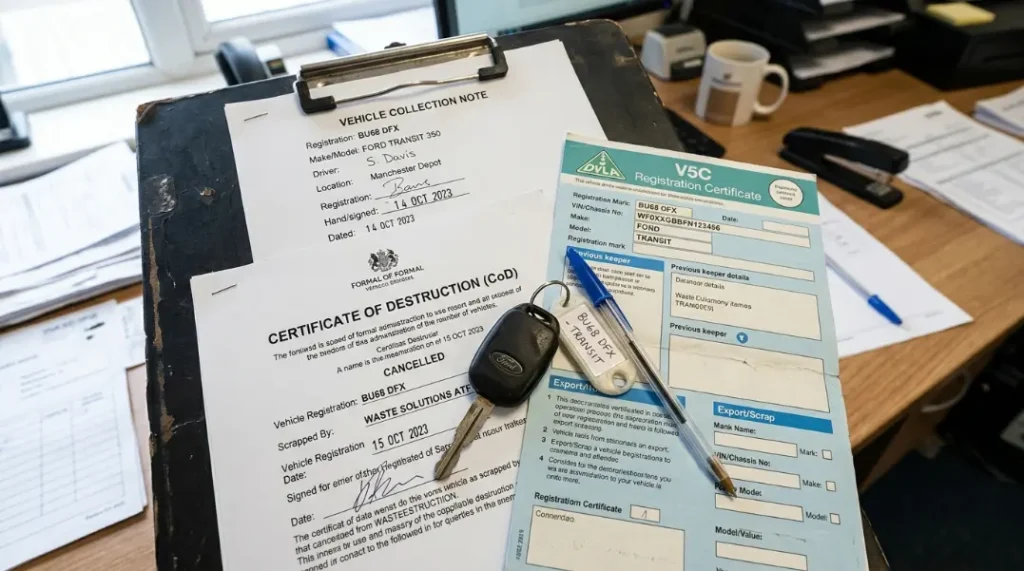
This is genuinely different from scrapping a personal car, and it’s worth getting right, particularly if the vehicle is going through your business accounts.
The V5C will show the company as registered keeper, not you personally. The notification and paperwork need to reflect that. If the business has since changed name, merged, or dissolved, contact DVLA directly before booking a collection, since the standard online notification route assumes an active registered keeper matching the V5C.
You may need a Waste Transfer Note, not just a Certificate of Destruction. Under Section 34 of the Environmental Protection Act 1990, any business handing over waste, and a scrapped commercial vehicle counts, has a duty of care obligation to document the transfer. In practice, most licensed ATFs and collection services provide documentation (an invoice or collection note) that satisfies this requirement as part of the standard process, but if your accountant or an auditor specifically asks for a Waste Transfer Note, it’s worth confirming with your collection company that they can provide one, rather than assuming your Certificate of Destruction alone covers it. The two documents serve different purposes: the CoD proves the vehicle no longer exists and closes your DVLA liability, the Waste Transfer Note proves the waste itself was handled by a properly registered carrier.
Keep everything for your asset register. The CoD, proof of collection, and any VAT invoice are what you’ll need to formally write the vehicle off your books. If it’s a leased or financed van, confirm with the finance company or leasing provider that disposal is approved before booking, scrapping a vehicle with an active finance agreement without the lender’s consent can create a separate legal problem entirely.
Scrapping more than one van at once is straightforward. If you’re clearing a small fleet, downsizing, or replacing several vehicles at once, we can coordinate multiple collections on a schedule that fits around your operating hours rather than disrupting a working day.
To put this in context: a sole trader scrapping their own transit van after 12 years on the road needs little more than the V5C, ID, and bank details, the same as scrapping a personal car. A limited company clearing three end-of-lease vans from a Trafford Park unit needs the same basics per vehicle, plus confirmation from the leasing company that disposal is approved, and ideally a consolidated collection note covering all three for their asset register. The paperwork scales with the complexity of the ownership situation, not with the size of the van itself.
What Determines Your Van’s Scrap Value
Van scrap value works on the same principle as any other scrap car price: weight and current metal rates, not cosmetic condition. Because vans generally weigh more than an equivalent family car and carry a heavier steel-to-plastic ratio in their construction, a typical panel van will out-value a saloon of similar age at the same collection. Larger Luton-style vans and heavier pickups tend to sit at the top of the range for the same reason. None of this changes if the van doesn’t run, has bodywork damage, or has failed its last MOT, scrap value tracks metal weight, not whether the engine turns over.
Scrap My Van in Trafford
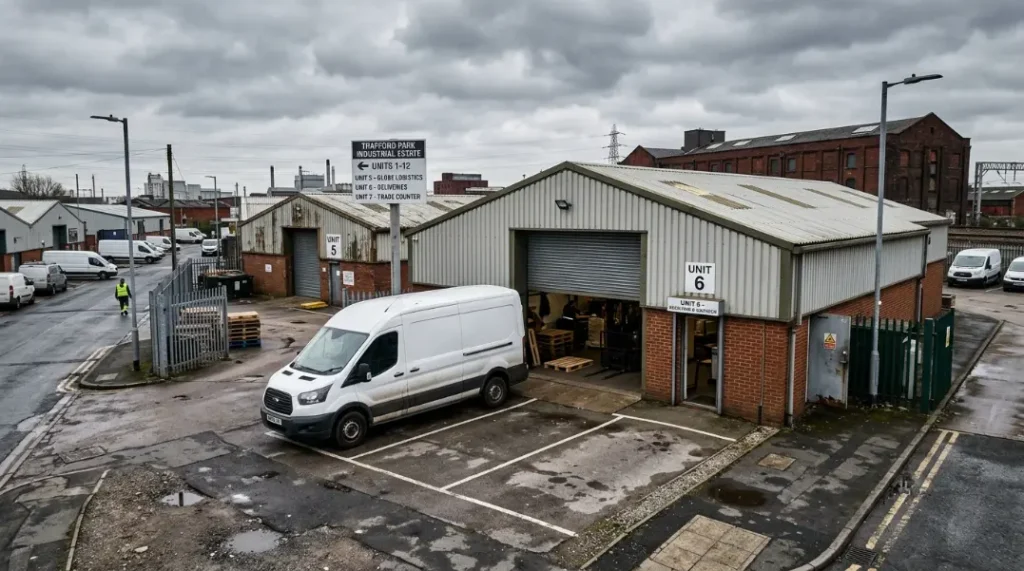
Trafford is home to Trafford Park, one of the largest industrial and trading estates in Europe, which means a huge concentration of trade vans, delivery vehicles and small business fleets across the borough. We collect from Trafford Park itself, Stretford, Sale, Urmston, Altrincham and the surrounding M postcodes, with same-day collection available for both individual owners and businesses operating out of trading estate units. If you’re clearing a van as part of a business move or fleet update, we can work around site access hours and loading bay restrictions common across the Trafford Park estate. For car collection details across the wider borough, our Trafford location page covers the full coverage area.
Scrap My Van in Salford
Salford’s mix of dense residential streets, MediaCityUK, and industrial areas around Ordsall and Weaste means van collections here range from a single driveway pickup to clearing a company vehicle from a business unit. We’re based in Salford ourselves, at Mode Wheel Road, so same-day collection across the borough is straightforward regardless of whether the van is parked on a residential street or a commercial site. See our Salford location page for the full area breakdown.
Scrap My Van in Manchester
From city centre trade vans working out of Ancoats and the Northern Quarter to larger fleet vehicles based in the outer suburbs, Manchester’s mix of small trades businesses and larger commercial operators means van collection needs vary a lot across the city. Whether it’s a single sole trader’s van or several vehicles from a company fleet, we collect across every Manchester postcode with the same free collection and same-day payment terms. Full coverage details for the city are on our Manchester location page.
Scrap My Van in Stockport
Stockport’s trading estates around Heaton Mersey, Cheadle Heath and the wider borough are home to plenty of small and medium businesses running light commercial fleets, alongside private van owners across the SK postcodes. We collect vans and light commercials up to 3.5 tonnes across the whole borough on the same terms as cars, with same-day and next-day slots regularly available. See our Stockport location page for the full postcode coverage.
What to Do With Company Signage and Liveries First
If your van carries business branding, vinyl wraps, or magnetic signage, it’s worth removing anything reusable before collection, particularly magnetic signs and anything not permanently applied. Full vinyl wraps don’t need to be stripped before scrapping, they’re removed as part of the standard depollution and dismantling process at the ATF and don’t affect the scrap valuation either way. If the branding itself has value, a set of magnetic door signs you’ll reuse on a replacement vehicle, for example, that’s the one thing worth taking off yourself rather than leaving on the van.
Getting Your Van Collected
Book your quote online or by phone with your registration and postcode. Once accepted, we arrange a collection time that works for you, whether that’s a residential address, a business unit, or a trading estate. Non-runners are collected using flatbed equipment at no extra charge, so a van that won’t start is treated no differently to one that runs perfectly. Payment goes by bank transfer on the day of collection, and your Certificate of Destruction follows once the van has been processed at a licensed ATF.
Frequently Asked Questions
Do I need a Waste Transfer Note to scrap a company van?
Businesses have a duty of care obligation under the Environmental Protection Act 1990 to document how their waste is handled, and a scrapped commercial vehicle falls under this. Most licensed collection services provide documentation that satisfies this as standard, but if your accountant specifically requires a formal Waste Transfer Note, confirm with your collection company before booking that they can issue one alongside your Certificate of Destruction.
Does racking or ply lining inside a van add to its scrap value?
No. Scrap valuation is based on the vehicle’s weight and metal content, not what’s fitted inside it. If any internal fit-out has resale value on its own, it’s worth removing and selling separately before collection rather than leaving it in the van.
Can I scrap a van that’s registered to a business that’s since closed?
Contact DVLA directly before booking a collection. The standard online notification process assumes an active registered keeper matching the V5C, so a dissolved company needs a different approach to update the record correctly.
Is scrapping a van worth more than scrapping a car?
Often, yes, though it depends on the specific vehicle. Vans typically have a heavier chassis and larger metal panels than an equivalent car, which generally means a higher scrap valuation for a similar age and condition, since value is driven by weight and metal content rather than the vehicle type itself.
Can you collect multiple vans from one business at the same time?
Yes. If you’re clearing a small fleet or replacing several vehicles, we can coordinate collections on a schedule that fits your operating hours, rather than treating each vehicle as a separate, disruptive visit.
What happens if my van is over 3.5 tonnes?
Vans and light commercials up to 3.5 tonnes fall under the standard End of Life Vehicles Regulations and receive a Certificate of Destruction in the usual way. Heavier vehicles fall outside this scope and may follow a different notification process, it’s worth confirming directly with the ATF handling your specific vehicle which document applies.
Does my van need a valid MOT or tax to be scrapped?
No. Neither MOT status nor road tax affects whether a van can be collected and scrapped. A SORN van, one that’s failed its last MOT, or one that’s been sitting untaxed for years is collected the same way as a fully taxed, roadworthy vehicle. You’ll still need to notify DVLA separately once collection is complete.
Do I need to empty the fuel tank or remove tools before collection?
Fuel is removed and handled safely as part of the standard depollution process at the ATF, so there’s no need to drain it yourself beforehand. You should remove your own tools, equipment, and any personal belongings from the cab and load area, in the same way you’d clear a car before collection, since these aren’t part of the vehicle itself and won’t be included in the scrap valuation.
Ready to find out what your van is worth? Get an instant quote or contact us directly if you’re arranging a business or fleet collection and want to talk through the details first.