
A standard 12V car battery is worth £3 to £12 for scrap in the UK, based on lead rates of £0.40 to £0.65 per kilogram. Most car batteries weigh between 10 kg and 20 kg, putting the typical payout in that range. AGM batteries used in stop-start cars are heavier and worth £6 to £15. Van and commercial batteries earn £9 to £22 depending on size.
Below is a full breakdown by battery type with per-kilogram rates and total values based on current UK lead prices. We also cover whether to remove your battery before scrapping the car, what happens with EV and hybrid batteries, and where to take a battery if you only have one to dispose of.
Current UK Scrap Battery Prices (September 2026)
| Battery Type | Rate per kg | Typical weight | Typical total |
|---|---|---|---|
| Standard lead-acid (small car) | £0.40–£0.55/kg | 10–14 kg | £3–£7 |
| Standard lead-acid (large car) | £0.45–£0.65/kg | 14–20 kg | £5–£12 |
| AGM battery (stop-start) | £0.45–£0.70/kg | 18–28 kg | £6–£15 |
| EFB battery | £0.40–£0.65/kg | 14–22 kg | £5–£11 |
| Van / commercial battery | £0.40–£0.65/kg | 25–50 kg | £9–£22 |
| EV / hybrid lithium pack | £0.25–£1.35+/kg | Varies | Varies |
Rates reflect current UK lead spot prices. Lead trades daily so values move, these are current as of September 2026.
What Determines a Car Battery’s Scrap Value?
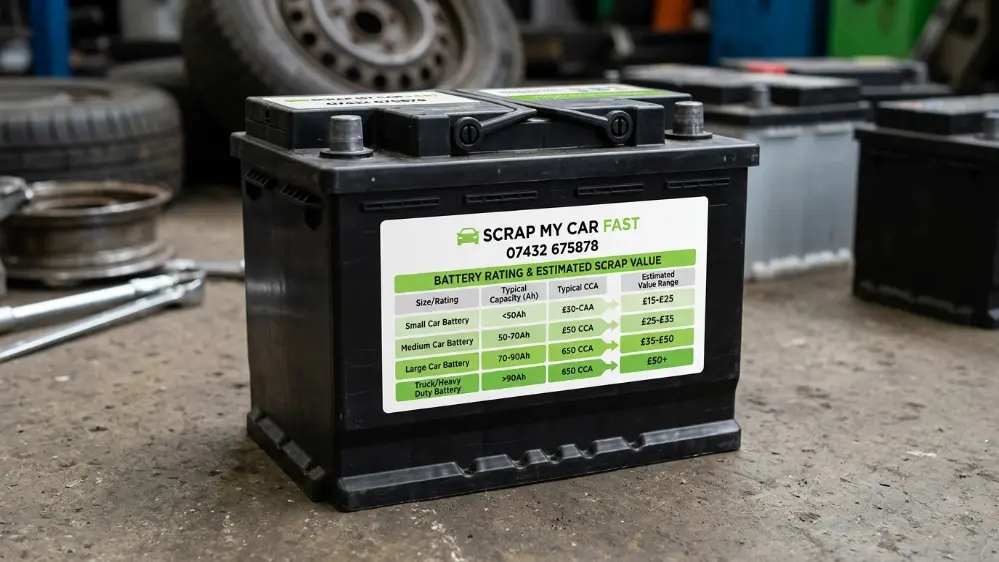
A standard car battery’s scrap value comes down almost entirely to its lead content. Lead-acid batteries, which is what sits under the bonnet of the vast majority of petrol and diesel cars on the road, are made up mostly of lead plates and lead oxide paste, both of which are fully recyclable and genuinely valuable as scrap metal.
Three things affect the final figure. First, the battery’s physical size and weight, a larger battery from a bigger car or van simply contains more lead than a small hatchback battery. Second, the current market price for scrap lead, which moves with global commodity prices the same way scrap steel does for the rest of the car. Third, the battery’s condition, whether it’s a standard, straightforward unit or something more specialised like an AGM (Absorbent Glass Mat) battery, which some newer cars with stop-start systems use and which can carry a slightly different value.
Does It Matter if the Battery Is Flat, Dead, or Leaking?
A battery that’s completely flat or won’t hold charge anymore still has full scrap value, because that value is based on the lead inside it, not whether it still works electrically. A battery that’s damaged or physically leaking is a slightly different situation. It still has scrap value, but it needs to be handled carefully and disposed of through a proper recycler rather than just left loose in a boot or garage, since leaking battery acid is corrosive and hazardous if it isn’t contained properly.
Scrapping Just a Battery vs Scrapping the Whole Car
If you’ve simply replaced a battery and want to get rid of the old one on its own, most scrap metal merchants and battery retailers will take it, and many garages that fit a new battery will handle the old one’s disposal automatically as part of the job, sometimes even knocking a small amount off your bill for it.
If you’re scrapping the entire car, though, there’s no need to think about the battery separately at all. Its value is already factored into the overall weight-based price you’re quoted for the vehicle. Trying to remove and sell it separately first would only cost you time for a relatively small amount of money, and it’s not something we’d recommend doing before a collection.
EV and Hybrid Batteries: A Different Story Entirely
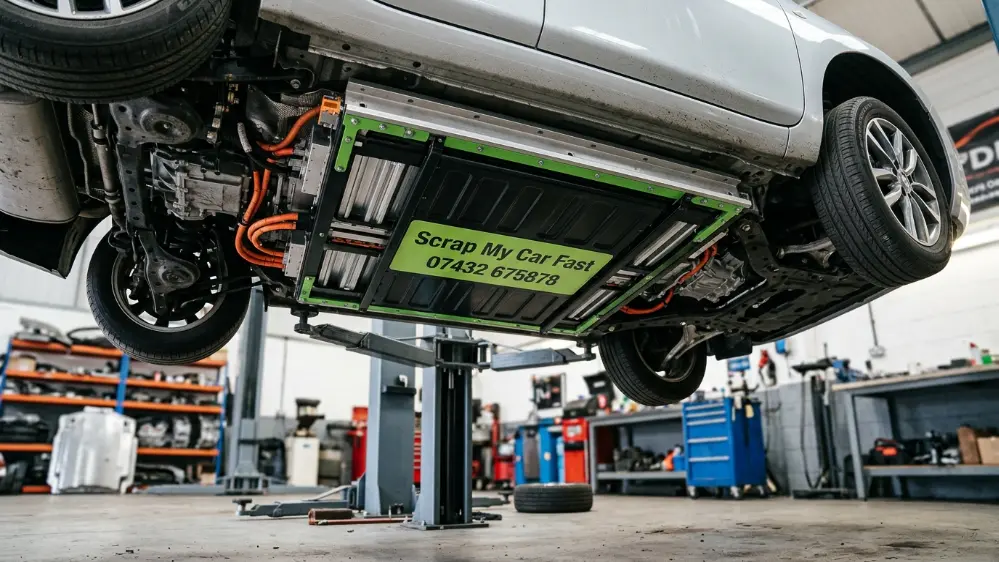
Electric and hybrid vehicle batteries work completely differently to a standard 12V lead-acid battery, both in what they’re made of and how they need to be handled. These are large lithium-ion battery packs containing valuable materials like lithium, cobalt, and nickel, all of which have genuine recycling value that’s grown substantially as more EVs reach the end of their working life. In principle, that makes an EV battery worth considerably more than a standard car battery, purely on raw material content.
In practice, though, EV batteries cannot go anywhere near a normal scrap metal merchant. They carry a real fire and chemical safety risk if they’re damaged, punctured, or handled incorrectly, so they need to go through a specialist recycler or an Authorised Treatment Facility that’s specifically equipped to handle high-voltage battery packs safely. If you’re scrapping an electric or hybrid car, this is handled as part of the overall de-pollution process by a properly licensed ATF, exactly the sort of facility we use, so you don’t need to arrange anything separately for the battery yourself.
Should You Remove Your Battery Before Scrapping Your Car?
No, and we’d actively advise against it. Leave the battery in place. When we collect a vehicle for scrapping, the entire de-pollution process, which includes safely removing and recycling the battery along with fluids, fuel, and other hazardous components, happens properly at a licensed Authorised Treatment Facility as part of the standard process. You can read more about exactly what an ATF does and why it matters on our existing guide, what is an Authorised Treatment Facility. Removing the battery yourself beforehand doesn’t add anything to your payout, since it’s already priced into the vehicle’s overall weight, and it just adds an extra step and a mild safety risk for no real benefit.
What Actually Happens to a Battery Once It’s Scrapped
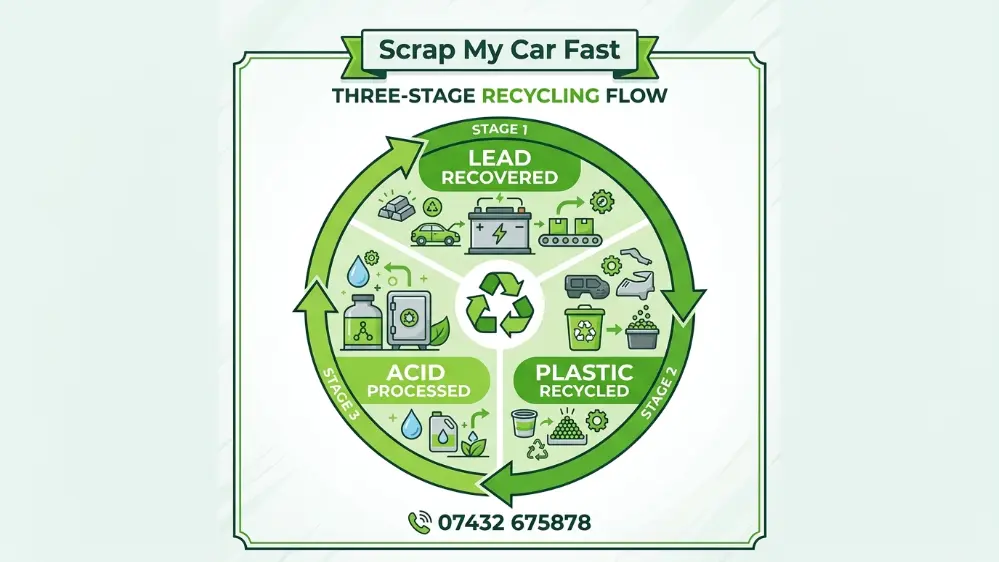
Lead-acid car batteries are one of the most successfully recycled products in the entire automotive industry, with recovery rates well above most other materials. Once collected, the battery casing is cracked open, the lead plates and paste are separated from the plastic casing and the acid electrolyte, and each component goes down its own recycling path. The lead is melted down and reused in new batteries, the plastic casing is shredded and recycled into new battery cases, and the acid is neutralised or processed for reuse in other industrial applications. It’s a genuinely closed loop process, which is part of why lead-acid battery recycling has been standard practice for decades, long before recycling became a wider talking point for other car parts.
Standard Batteries vs AGM Batteries
Most cars still run a conventional flooded lead-acid battery, but a growing number of newer cars, particularly ones with stop-start engine technology, use an AGM battery instead, where the electrolyte is held in a glass fibre mat rather than sitting as a liquid. AGM batteries still contain valuable lead and are still recycled the same fundamental way, though they’re built slightly differently and can occasionally carry a marginally different scrap value depending on the merchant. If you’re not sure which type your car has, checking the label on top of the battery itself will usually tell you, AGM batteries are almost always clearly marked as such.
Vans and Larger Vehicle Batteries
Vans and larger commercial vehicles typically use bigger, heavier batteries than an ordinary car, sometimes even a pair of batteries wired together for extra starting power. This means the battery’s contribution to a van’s overall scrap value tends to be a bit higher in absolute terms than for a small hatchback, simply due to the extra lead content, though the same principle applies, it’s folded into the vehicle’s total weight-based quote rather than priced separately. If you’re dealing with a van rather than a car, our scrap my van guide covers the wider process in full.
Where to Take a Standalone Battery Yourself
If you’re not scrapping a car at all, and simply need to get rid of an old battery on its own, most local scrap metal merchants across Greater Manchester will take one, and many will pay a small amount on the spot based on its weight. Garages that fit replacement batteries will also usually dispose of the old one responsibly as part of the job, and by law they’re required to take your old battery back if you’re buying a new one from them, under producer responsibility rules that apply to battery retailers. Whichever route you choose, avoid simply putting a car battery in with household rubbish, it counts as hazardous waste and needs to go through a proper recycling route regardless of its condition.
Why Battery Scrap Value Barely Moves the Needle on a Whole Car
It’s worth putting the numbers in perspective. A standard battery contributing a few pounds to a car worth several hundred pounds in total scrap value is a small fraction of the overall figure, generally somewhere in the low single-digit percentage range. The vehicle’s total weight in steel and other metals, plus whether the catalytic converter is intact, will always move the final number far more than the battery does. Knowing what the battery contributes satisfies curiosity, but it shouldn’t be the deciding factor in whether or when you scrap a car.
Getting the Best Overall Value for Your Car
If you’re weighing up whether an old car is worth scrapping at all, the battery is genuinely one of the smaller factors in the final number. What actually moves the price is the vehicle’s total weight and the current scrap metal rate, alongside whether the catalytic converter is still intact, which can add a noticeable amount on its own. Our scrap car calculator will give you an accurate, no-obligation figure for the whole vehicle in under a minute, and our guide on what drives scrap car prices in the UK explains how these numbers move throughout the year if you want the fuller picture before deciding when to sell.
What Happens Next
Once you’ve got a quote you’re happy with, you can book a free collection from anywhere across Greater Manchester, whether you’re in Manchester itself or one of the surrounding boroughs, and one of our drivers will come to you, whether that’s a straightforward scrap my old car job or something more involved. Payment lands in your account the same day the vehicle is collected, and you’ll get a Certificate of Destruction confirming everything, including the battery, has been handled properly and legally.
Frequently Asked Questions
How much is a scrap car battery worth?
A standard 12V car battery is worth £3 to £12 as scrap in the UK. Small car batteries (10 to 14 kg) earn £3 to £7. Larger car batteries (14 to 20 kg) earn £5 to £12. Van and commercial batteries (25 to 50 kg) earn £9 to £22. The exact figure depends on the battery’s weight and the current lead price on the day, lead rates change daily on the commodity market.
Can I sell just my car battery for scrap without scrapping the whole car?
Yes. Scrap metal merchants and many garages will take an old battery on its own, sometimes deducting a small amount from a replacement battery’s cost as part of the swap.
Do EV and hybrid batteries have scrap value?
Yes, and often considerably more than a standard battery due to the lithium, cobalt, and nickel they contain, but they must be handled by a specialist recycler or licensed ATF due to fire and chemical safety risks, never a general scrap metal merchant.
Should I remove my battery before scrapping my car?
No. Leave it in place. Its value is already included in your overall scrap quote, and a licensed ATF will remove and recycle it safely as part of the standard de-pollution process.
Does a dead or flat battery still have scrap value?
Yes. Scrap value is based on the lead content, not whether the battery still holds a charge, so a completely dead battery is worth the same as a working one of the same size.
What’s the difference between a standard battery and an AGM battery for scrap purposes?
Both are lead-acid batteries and both are recyclable. The key difference for scrap is weight. AGM batteries, which are common in cars with stop-start technology, are heavier than a standard flooded battery of the same voltage, typically 18 to 28 kg versus 10 to 18 kg. That extra weight means an AGM battery is usually worth £6 to £15 as scrap compared to £3 to £12 for a standard unit. The label on top of the battery will confirm which type you have.
How much is a car battery worth as scrap by weight?
UK lead scrap rates typically sit between £0.40 and £0.80 per kilogram for battery lead. A standard car battery weighing 14 kg is worth roughly £6 to £11. A heavy van battery at 35 kg earns £14 to £28 at the same rates. The simplest way to get an exact figure is to weigh the battery at a local scrap metal merchant, they will pay on the spot by weight at the day’s rate.
Are old car batteries worth anything?
Yes. An old or corroded battery has the same scrap value as a newer one of the same weight because scrap dealers buy the lead content, not the battery’s age or condition. The only battery that loses value is one that is physically cracked and leaking, as some merchants will not accept it due to acid handling regulations.
Want to know what your whole car is worth, battery included? Get an instant quote now and we’ll arrange free, same-day collection anywhere across Greater Manchester.